
Underage drinking continued a long-term decline in 2025, reaching low levels.
Less than
1 in 10
high school seniors reports binge drinking.
48%
of college students report they did not consume alcohol in the past 30 days, and 28% did drink in the past 12-months.
Lifetime abstention from alcohol, cannabis, and nicotine is at the highest levels recorded for 8th, 10th, and 12th graders.
The number of teens who have never consumed alcohol in their lifetime continues to increase.
83%
of 8th graders have never consumed alcohol.
Though progress is being made, underage drinking remains a persistent problem. According to the results from the 2025 National Survey on Drug Use and Health (NSDUH) report, about 5.4 million Americans between the ages of 12 and 20 report current alcohol consumption; this represents almost 14% of this age group for whom alcohol consumption is illegal. Between 2021 and 2025, the survey noted declines in the prevalence rates of monthly alcohol consumption among 12- to 20-year-olds; however, rates of binge drinking and heavy alcohol consumption remained relatively unchanged. Year-over-year results from 2024 to 2025 showed slight, but not statistically significant, increases in past 30-day consumption, binge drinking, and heavy alcohol consumption among 12- to 20-year-olds.
Early drinking is a risk factor for alcohol use disorders. Adults who had taken their first drink of alcohol before the age of 15 were 6.5 times more likely to experience an alcohol use disorder than those who didn’t start drinking before age 21. (SAMHSA, 2017 NSDUH).
After declining significantly during the COVID-19 pandemic, substance use among American youth has continued to hold steady at lowered levels for the fifth year in a row, including record low levels in underage drinking. These prevalence rates continue to be significant in that they demonstrate the potential lifetime reduction in substance use by delaying the onset of alcohol and other substances by a single year.
The 2025 Monitoring the Future study found the prevalence of underage drinking among America’s teens continued a long-standing downward trend, reaching new or near historic low levels. Lifetime, past year, and past 30-day consumption declined among 8th, 10th, and 12th grade students from 2024. The percentage of students who consumed any alcohol in the past 12 months in 2025 was 41% among 12th grade, 24% in 10th grade, and 11% in 8th grade.
Underage Drinking–National Survey Results
College Drinking-National Survey Results
Gender Differences in Alcohol Consumption
Where Youth Get their Alcohol
Underage Drinking – National Statistics
Since 1991, the Foundation for Advancing Alcohol Responsibility has been leading the fight to eliminate drunk driving and underage drinking. While rates have declined, alcohol consumption among youth under the legal drinking age remains a concern.
The rate of current alcohol consumption increases with increasing age according to the 2025 National Survey on Drug Use and Health (NSDUH) from 1.6% among 12-13 year olds to 4.5% among 14-15 years to 11% at ages 16-17, and more than doubling among 18-20 year olds (28%).
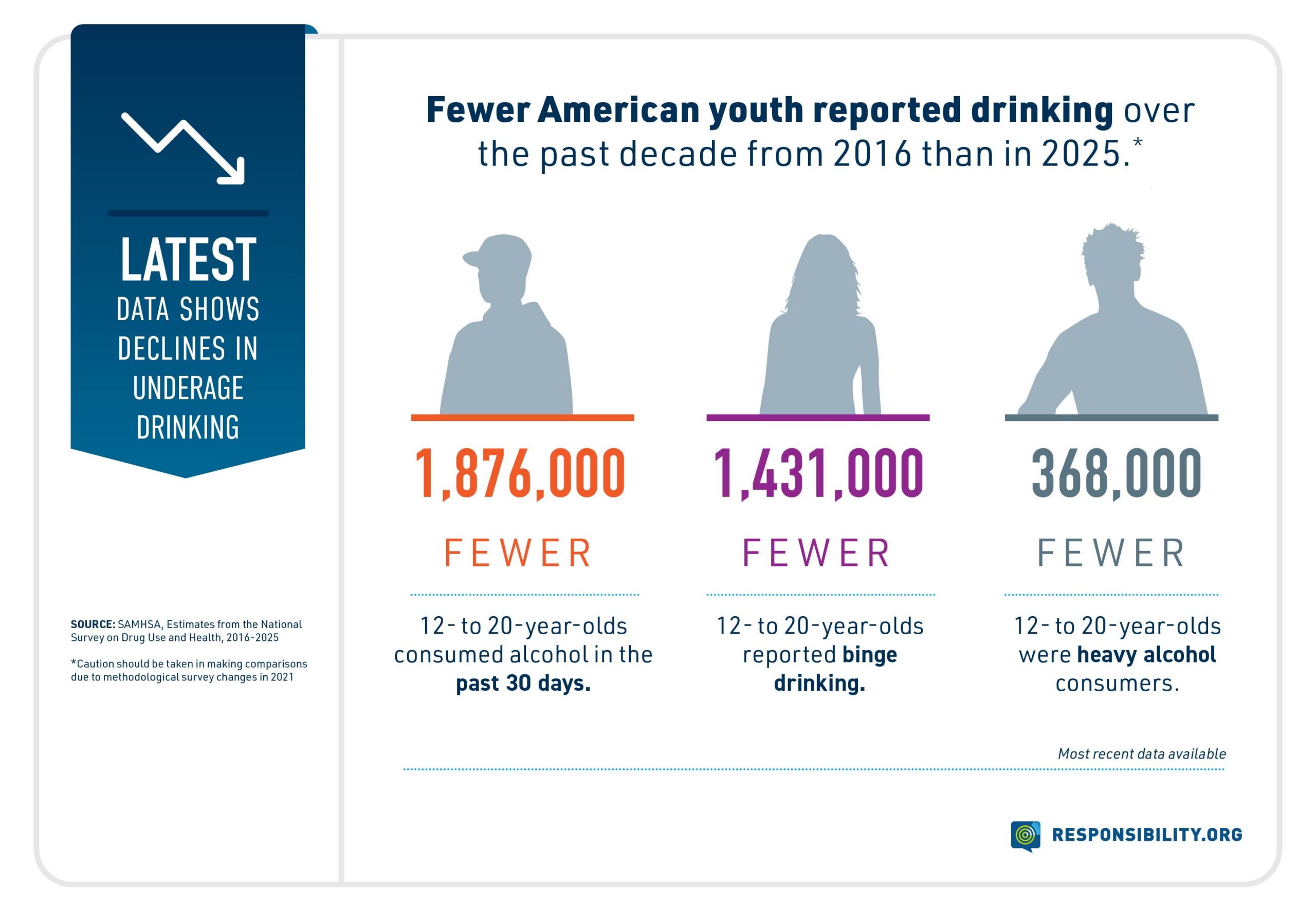
Fewer American teens reported drinking as underage drinking continues to decline across key measures.
.
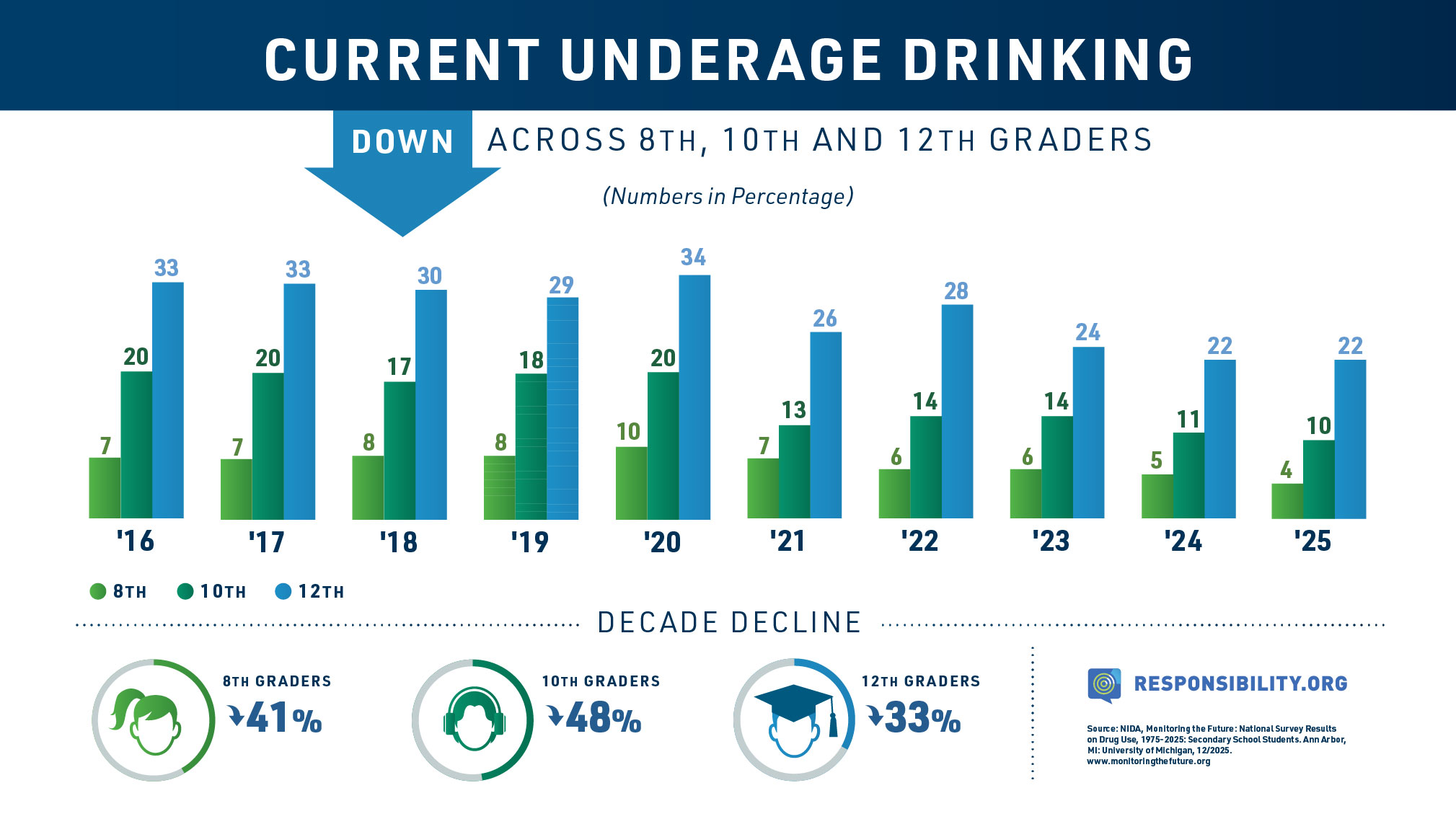
Past 30-day consumption continued a long-term decline among 8th and 10th graders, with a slight uptick among 12th graders from 2024 to 2025.
Monitoring the Future
The majority of American teens do not drink alcohol, and the long-term declines noted over the past few decades continued in 2025, although none of the one-year declines from 2024 to 2025 were statistically significant. As noted in the 2025 Monitoring the Future survey, lifetime, annual, past month consumption, and binge drinking levels are below pre-pandemic levels and at historic low levels. An unintended but positive consequence of the COVID-19 pandemic was unprecedented declines in underage alcohol consumption among American teens and student data in 2025 shows no signs of a rebound, indicating a positive and lasting change in behaviors. In fact, lifetime and past 30-day abstention from alcohol, cannabis, or nicotine (by vaping or cigarettes) reached record high levels among 8th, 10th, and 12th graders.
In 2025, the noted decreases in the prevalence of alcohol consumption among youth continued a long-term decline that has taken place over nearly three decades and is significantly lower than peak years recorded in the early to mid-1990s, when tracking this data began. From 2000 to 2025 past year consumption alone has decreased 44 percent proportionally, from 73% to 41% among high school seniors, 64 percent proportionally, from 65% to 24% among 10th graders, and 74 percent proportionally, from 43% to 11% among 8th graders.
Past 30-day, or current, underage drinking, also continued to trend downward in 2025. At the individual grade levels, past month consumption declined among 8th and 10th grade students between 2024 and 2025, but increased 0.6 percentage points among 12th grade students.
- Past month consumption among eighth graders has continued to decline steadily, reaching a record low of four percent, decreasing 41 percent over the past ten years.
- Ten percent of 10th graders report current alcohol consumption, declining 48 percent from 20 percent in 2016.
- Slightly more than one in five 12th graders report consuming alcohol in the past 30 days. Current drinking among high seniors is down 39 percent over the past decade, from 35 percent in 2015 to 22 percent in 2024.
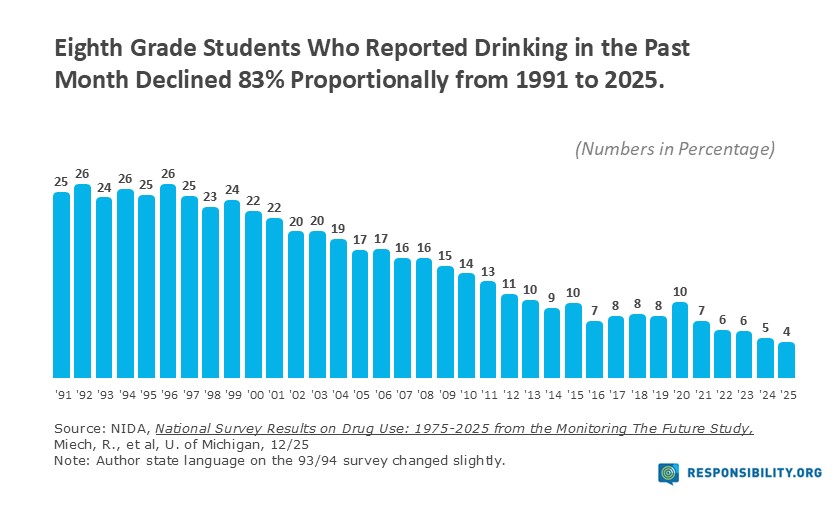
Past-month consumption among 8th graders continues its modest, steady long-term declines. Four percent report current alcohol consumption, down 41% over the past decade.
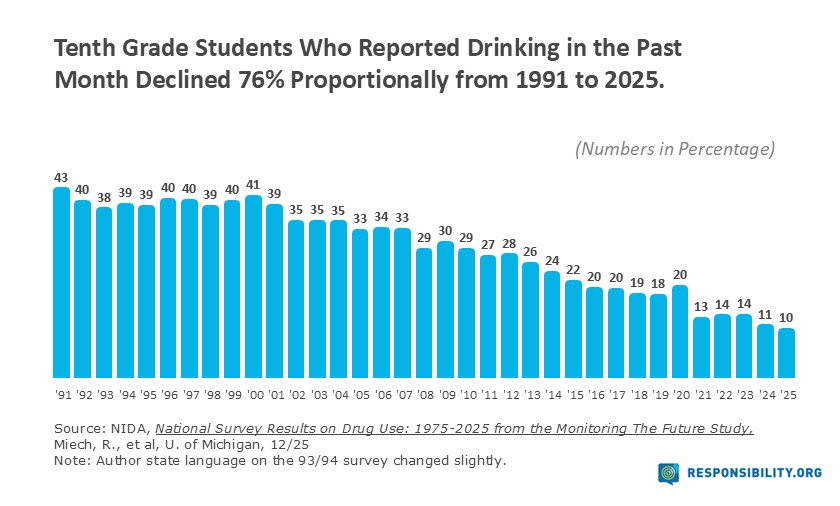
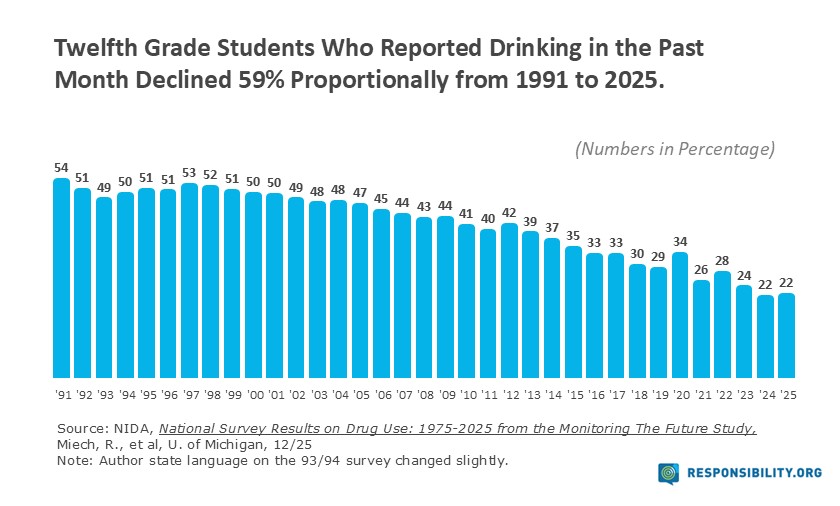
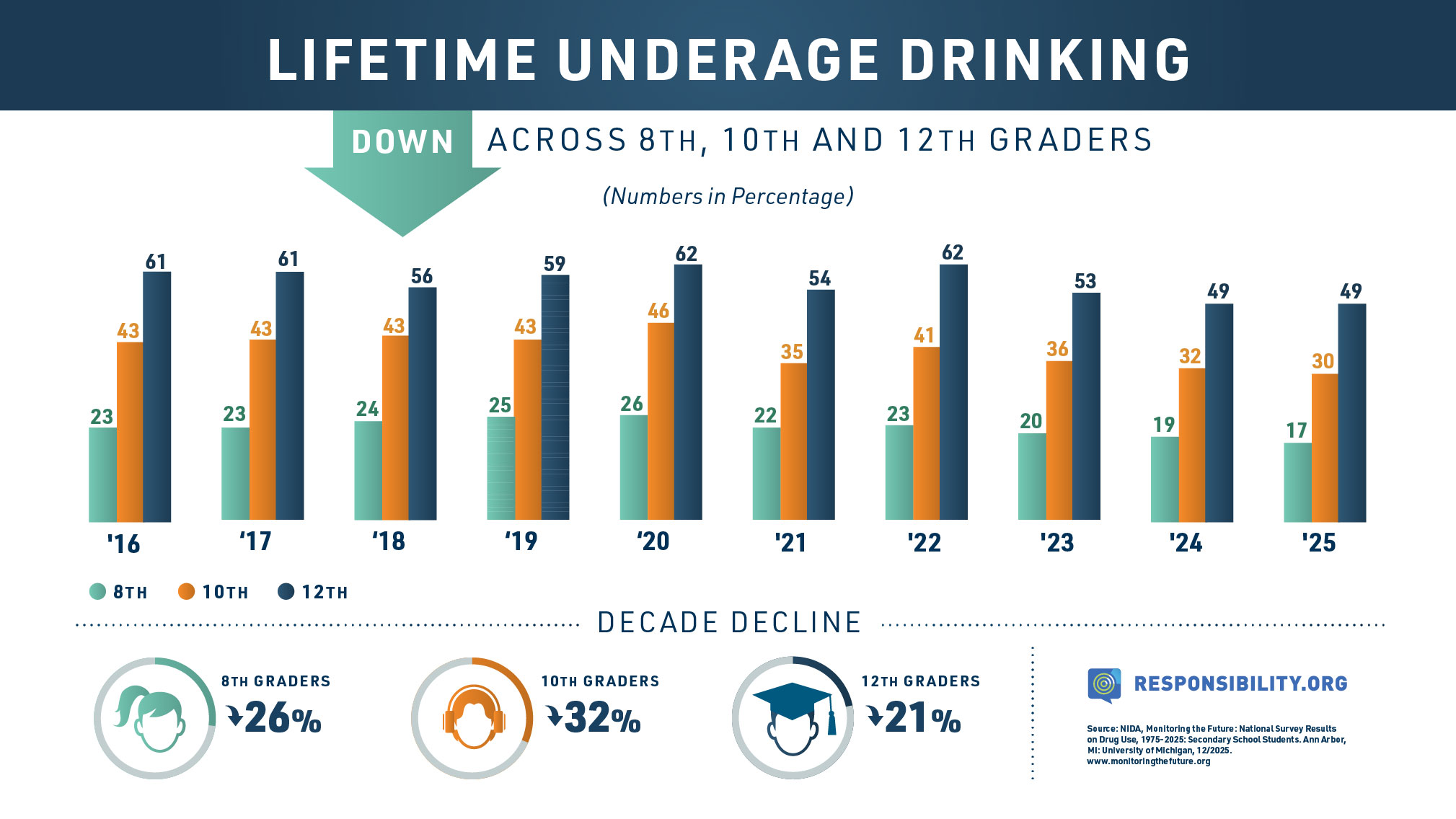
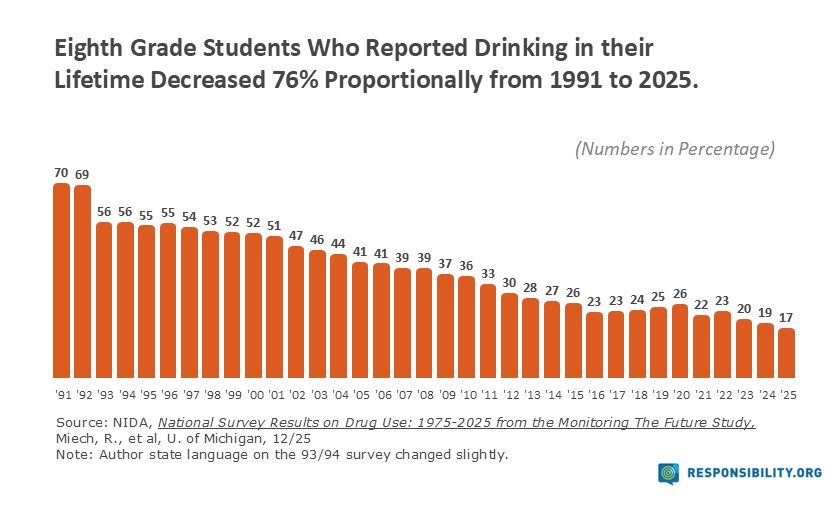
The number of teens in 8th, 10th, and 12th grade who have never consumed alcohol in their lifetime continues to increase. Lifetime consumption of alcohol declined among eighth and tenth graders and remained unchanged among twelfth graders from 2024 to 2025. More than four out of five 8th graders report they have never consumed alcohol, with about 17 percent reporting they have consumed alcohol at least once in their lifetime. Lifetime consumption among eighth graders is down 76% proportionally from 70% in 1991. Seventy percent of 10th graders have never consumed alcohol in their lifetime, a decrease of 65 percent, proportionally, from 1991, and 32 percent since 2016. Additionally, 51% of high school seniors report they have never consumed alcohol, down 45 percent, proportionally, from a high of 88 percent in 1991, and declining 21 percent over the past ten years.
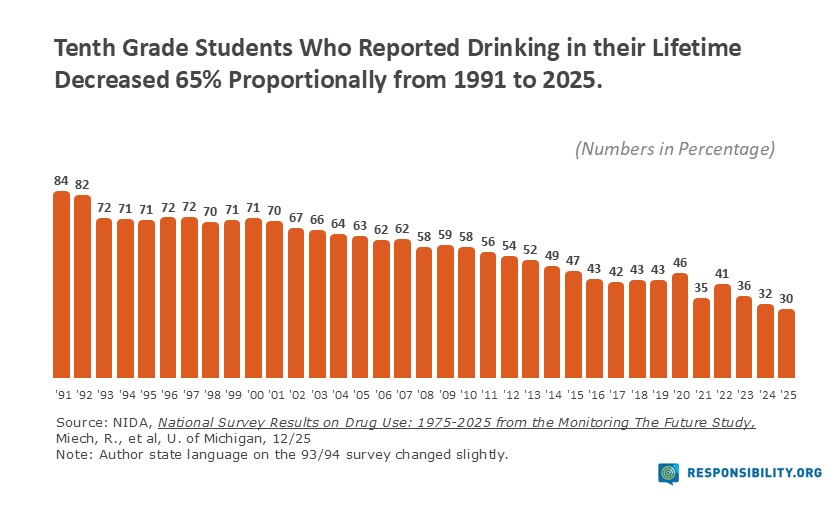
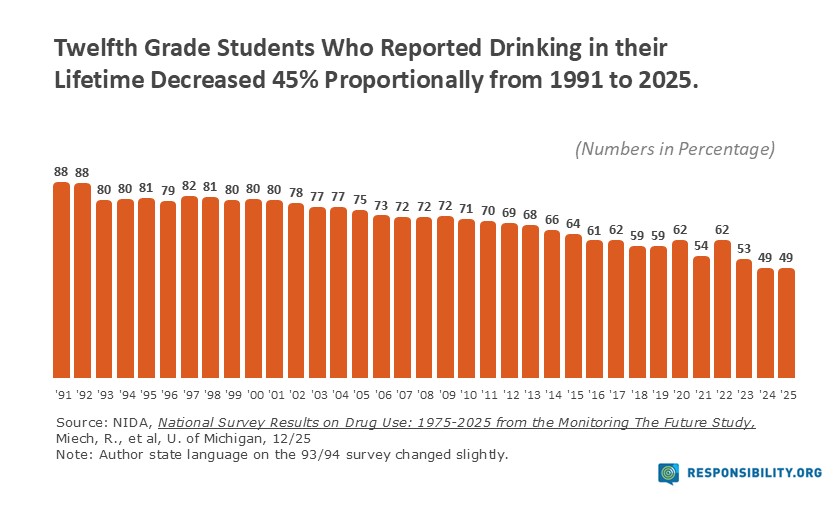
Annual consumption rates followed a similar prevalence pattern, declining among students in 8th, 10th, and 12th grades. In 2025, at all three individual grade level, annual consumption reached new historic low levels – 11% among 8th graders, 24 percent among 10th graders, and 41% among 12th graders – declining 79% proportionally among 8thgraders, nearly 68% among 10thgraders, and 47% among 12thgraders since record-keeping began in 1991.
- Eleven percent of eighth graders report consuming alcohol in the past year, down 36% proportionally from 18% in 2016.
- One in four (24%) tenth graders’ reported drinking alcohol in the past 12-months – a decrease in the annual consumption rate of 10% proportionally from 2024 to 2025, and a decline of 39%, proportionally, from 38% in 2016.
- The prevalence rate of past year consumption among high school seniors has declined 26% proportionally from 56% in 2016 to 41% in 2024.
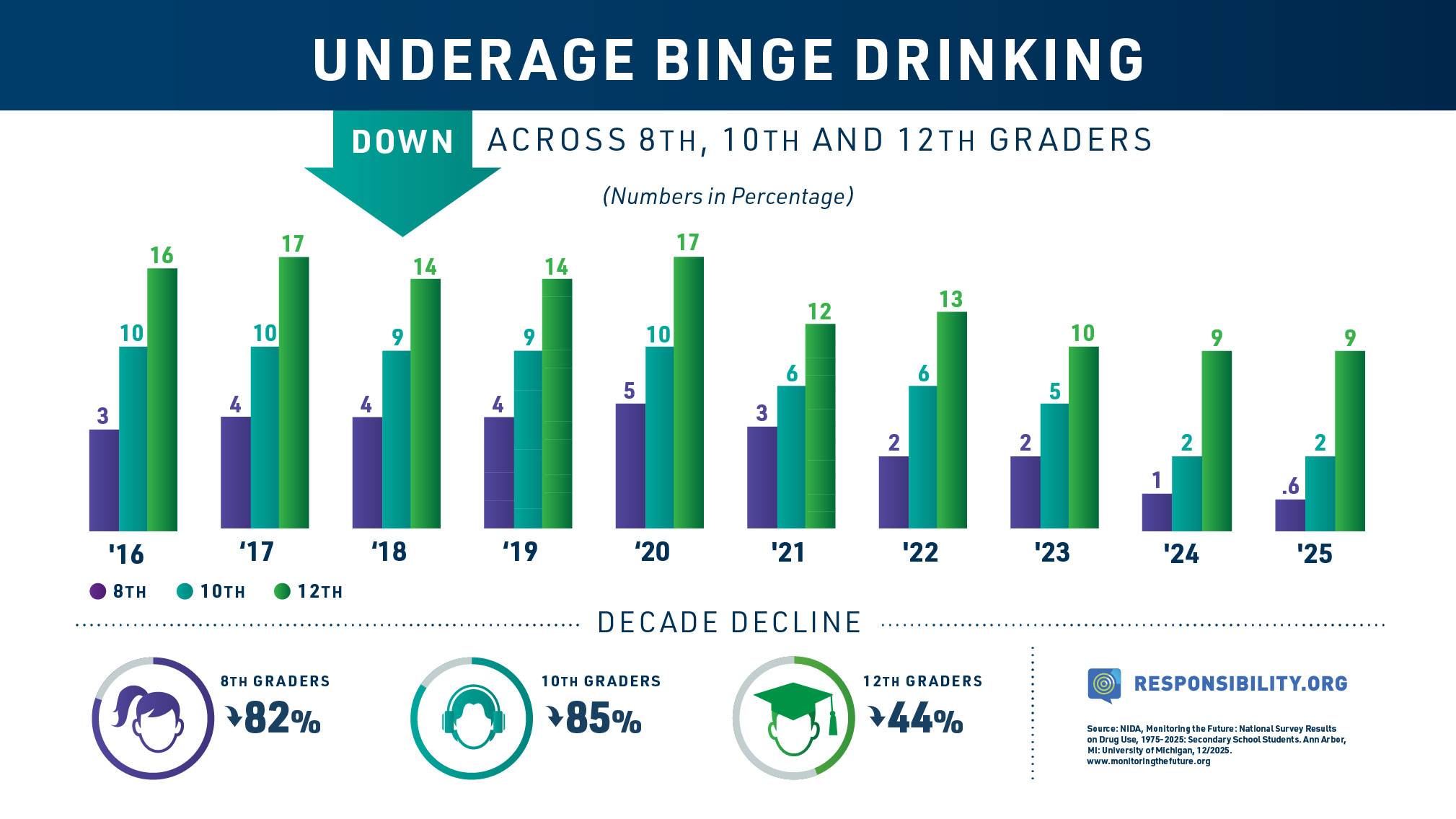
Underage binge drinking (defined as having five or more drinks in a row in the past two weeks) remained relatively unchanged at all three grade levels in 2025. The number of teens engaging in this risky and harmful behavior remains at record low levels; however, the one-year decreases from 2024 to 2025 were not statistically significant. Extreme binge drinking of 10+ drinks in a row in the past two weeks has also declined substantially since first tracked (2005 among 12th graders and 2006 among 8th and 10th graders).
- Less than one percent of 8th graders reported binge drinking in 2025, a decrease of 94 percent proportionally from 11% in 1991; and down 82 percent from 3.4% in 2016 to 0.6% in 2025.
- Less than two percent of 10th graders engaged in binge drinking, down 85 percent from 10 percent in 2016, and 94 percent from a record high 24% in 2000.
- Nine percent of high school seniors report consuming five or more drinks in a row, a 44 percent decrease proportionally, from 16 percent in 2016, and a 70 percent decline proportionally from 30 percent 1991 to 9% in 2025.
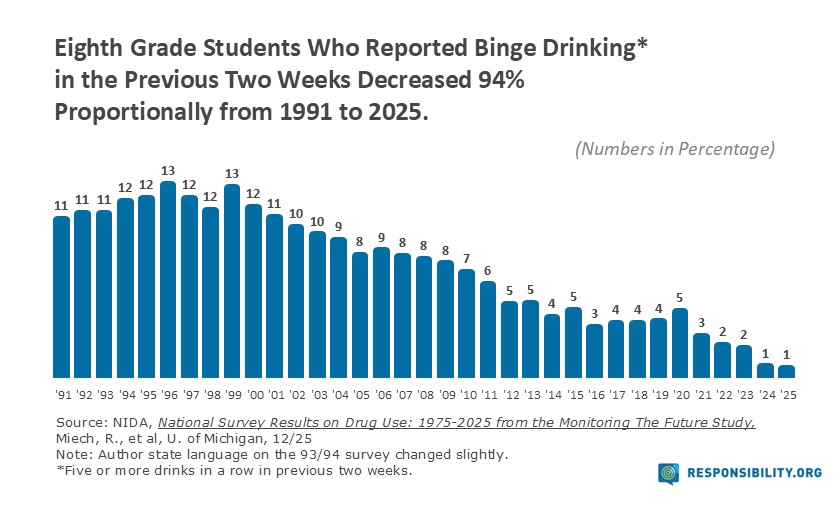
Binge drinking is nearly non-existent among 8th graders, with less than 1% reporting consuming five or more drinks, down 82% since 2016.
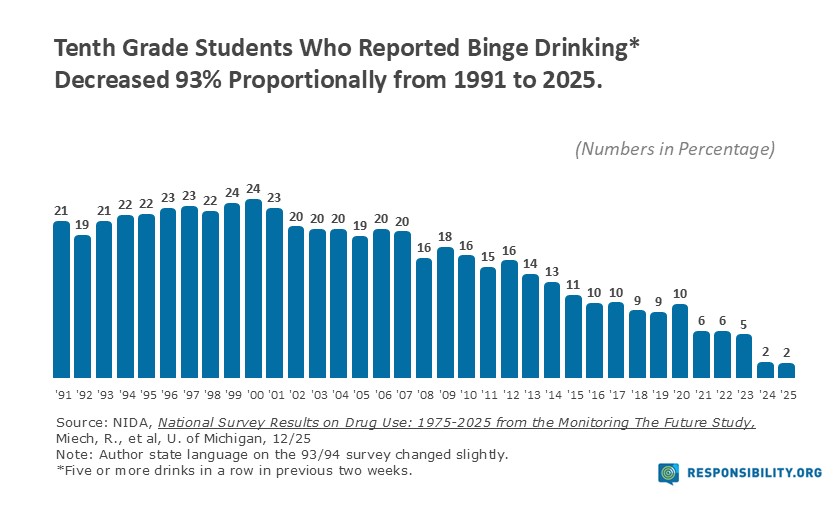
Perceived risk of binge drinking increased among 10th graders in 2025, with less than 2% engaging in this behavior. Binge drinking declined 85% from 10% in 2016.
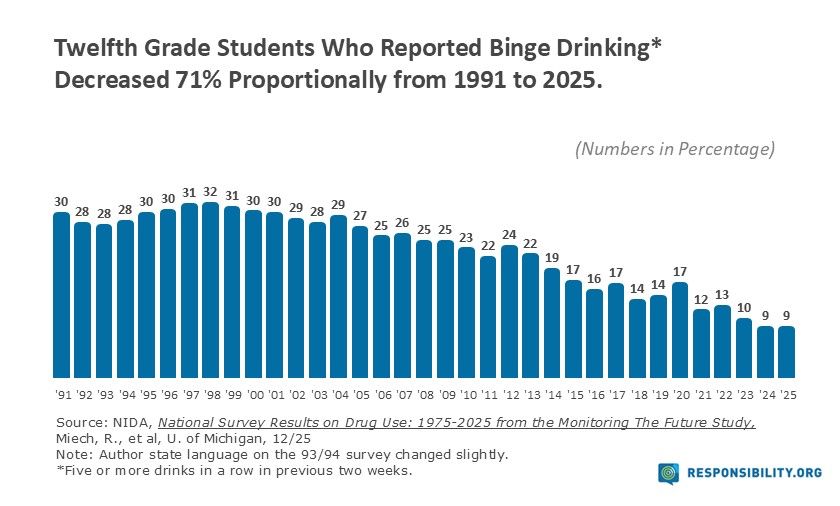
In 2025, nine percent of 12th graders reported consuming five or more drinks in a row in the previous two weeks, down 44% since 2016.
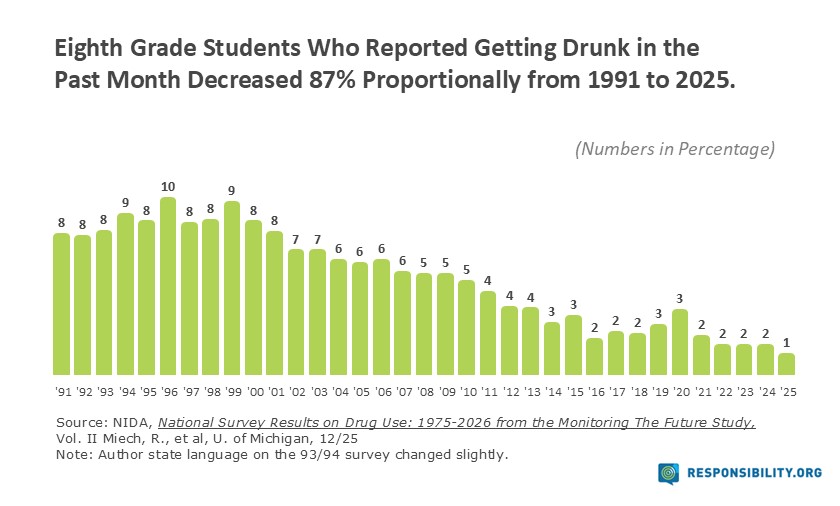
Ninety-nine percent of 8th graders report they have not been drunk in the past month. Eighth grade students who reported getting drunk in the past 30 days decreased 44% over the past decade, and 87% since 1991.
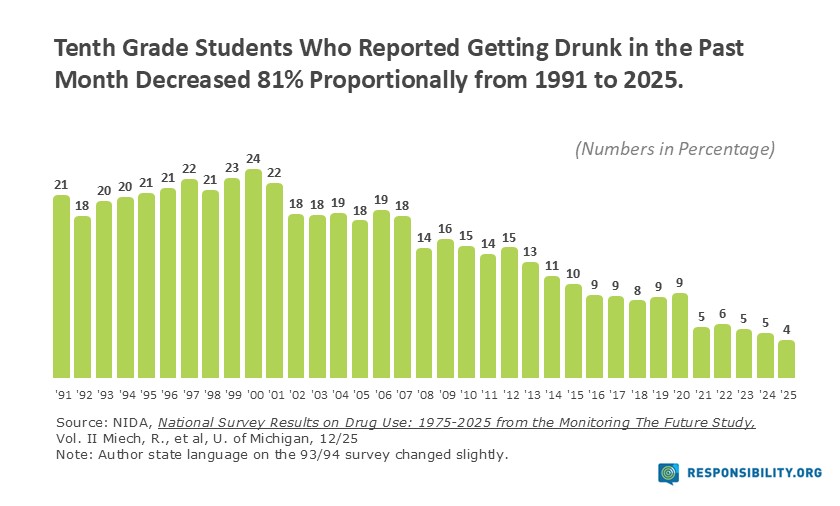
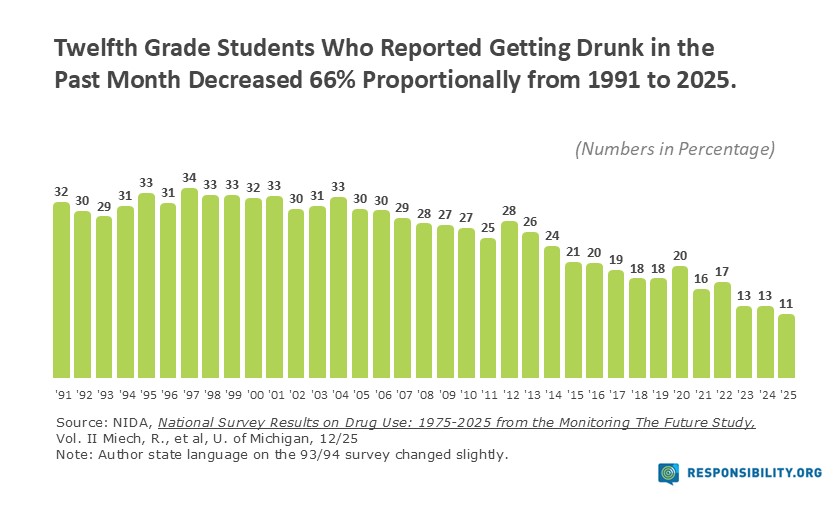
(Source: NIDA, National Survey Results on Drug Use from 2025 Monitoring the Future Study: 1975-2025, 12/2025)
National Survey on Drug Use and Health
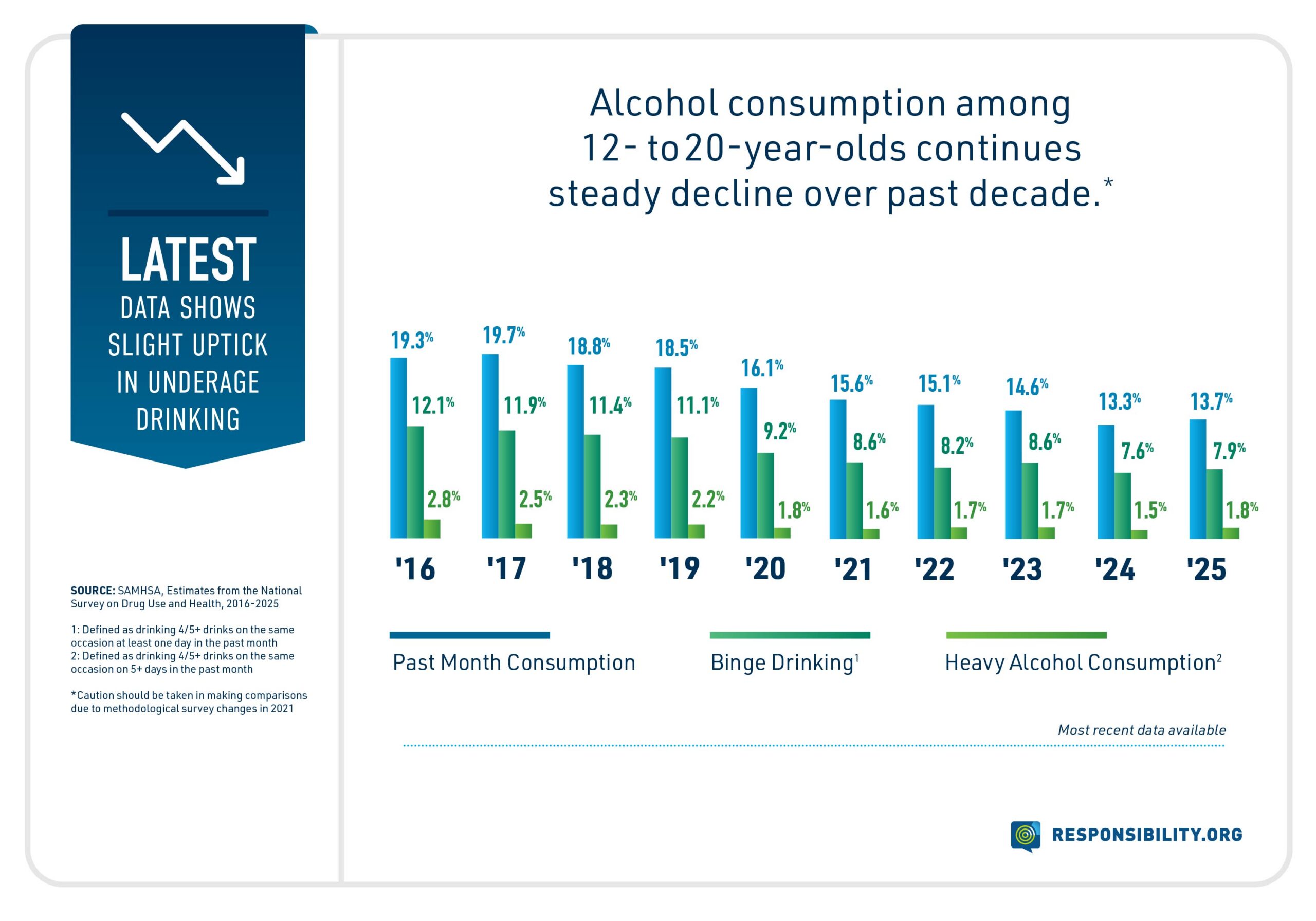
According to the 2025 National Survey on Drug Use and Health (NSDUH), an estimated 5.4 million Americans between the ages of 12 and 20 report current alcohol consumption; this represents nearly 14% of this age group for whom alcohol consumption is illegal.
For more than three decades the Substance Abuse and Mental Health Services Administration (SAMHSA) has collected data to advance the behavioral health of Americans, reporting on key substance use and mental health indicators. From 2021 to 2025, the National Survey on Drug Use and Health surveys have shown a slight decline in the prevalence rates of lifetime, annual, and current underage drinking, while binge drinking and heavy alcohol consumption have remained relatively unchanged. Among 12- to 20-year olds, there were more than 1.8 million fewer underage drinkers and more than 1.4 million fewer binge drinkers since 2015.
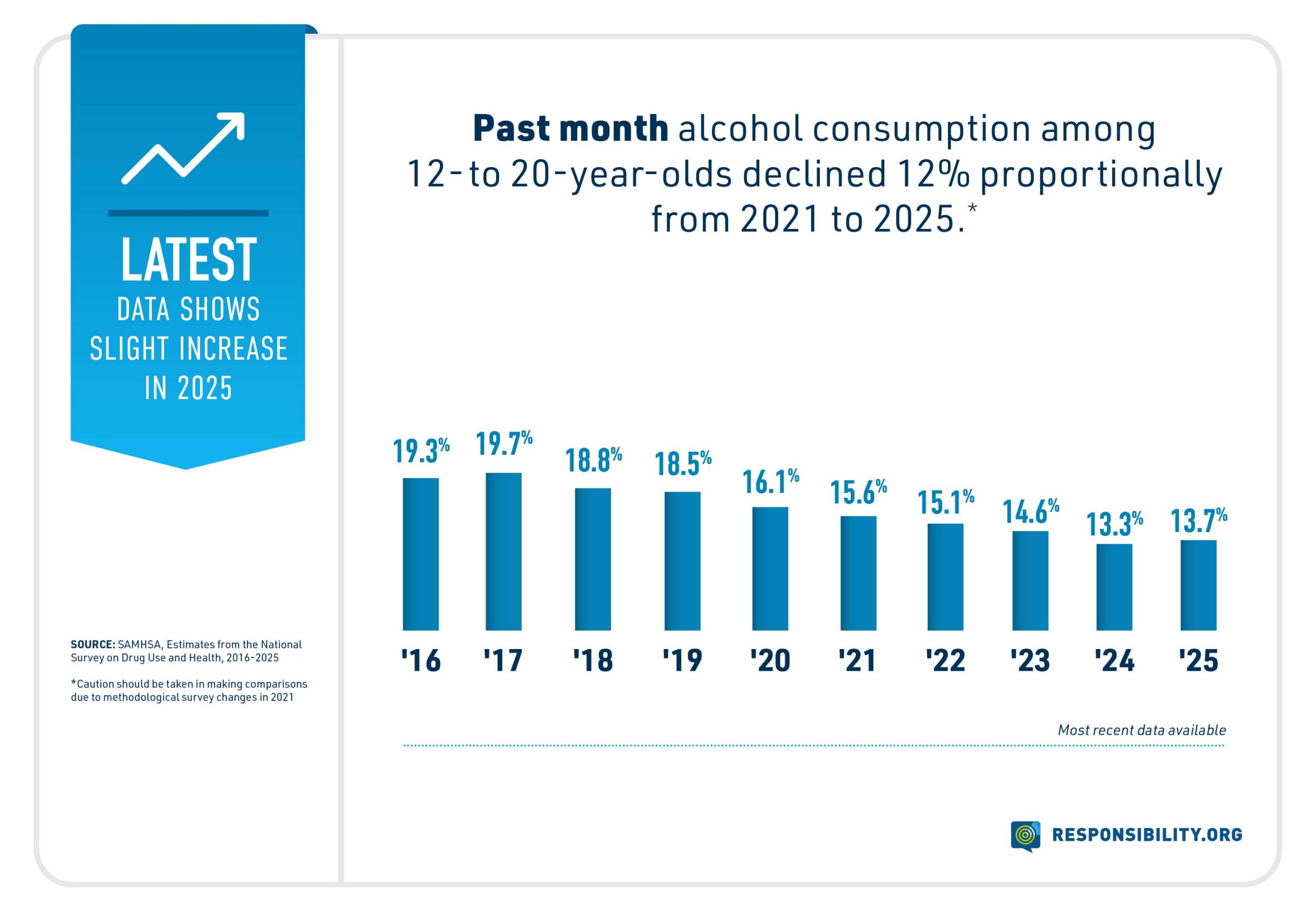
- Past month consumption among 12- to 20-year-olds declined 12 percent proportionally from 15.6% in 2021 to 13.7% in 2025. An estimated 5.4 million youth report consuming at least one drink in the past month.
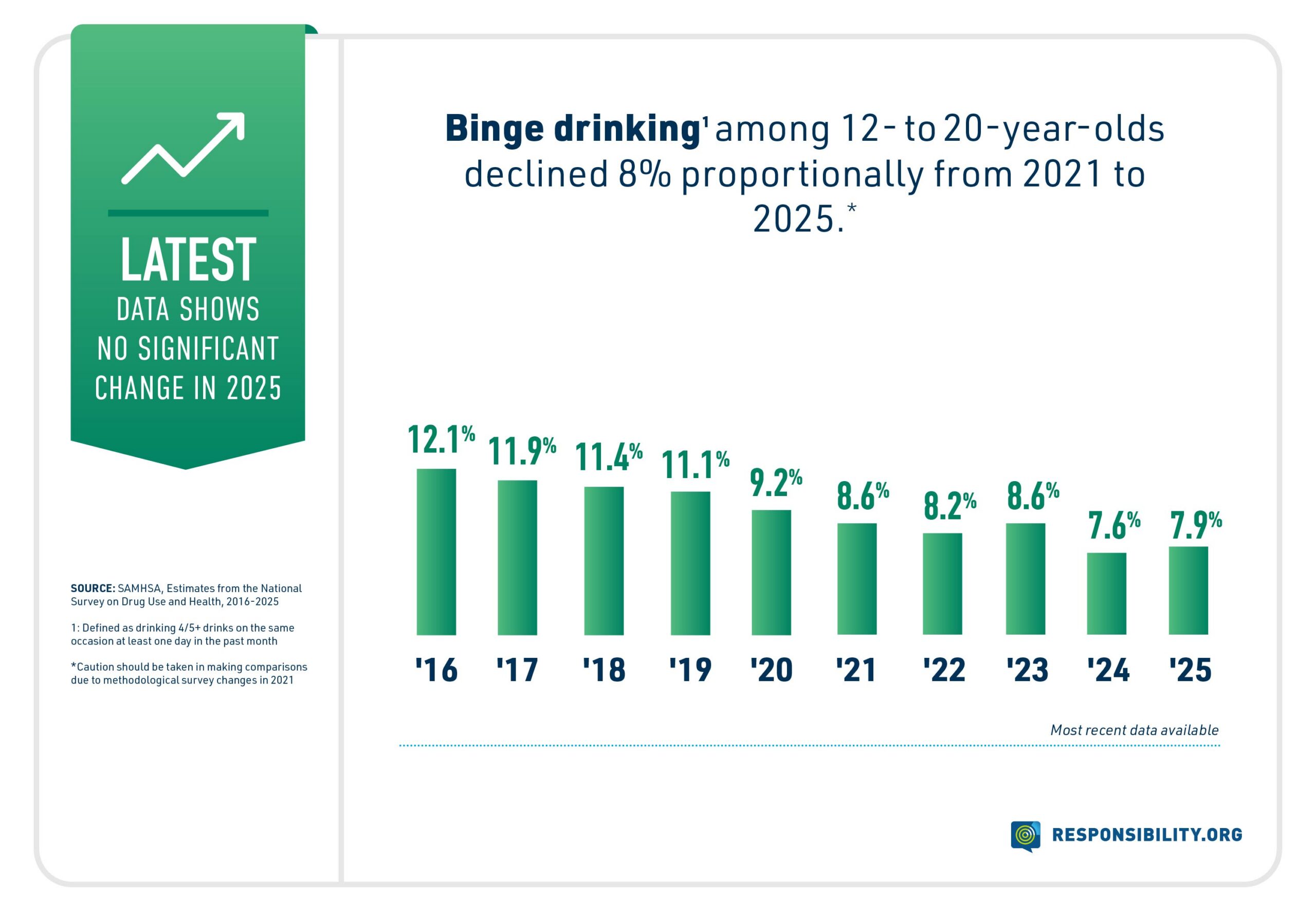
- Underage binge drinking rates (four/five or more drinks on the same occasion on at least one day in the past month) remained relatively unchanged from 8.6% in 2021 to 7.9% in 2025. Of the 3.1 million youth reporting binge drinking, males (8.2 percent) were slightly more likely to engage in the risky behavior than their female peers (7.7 percent).
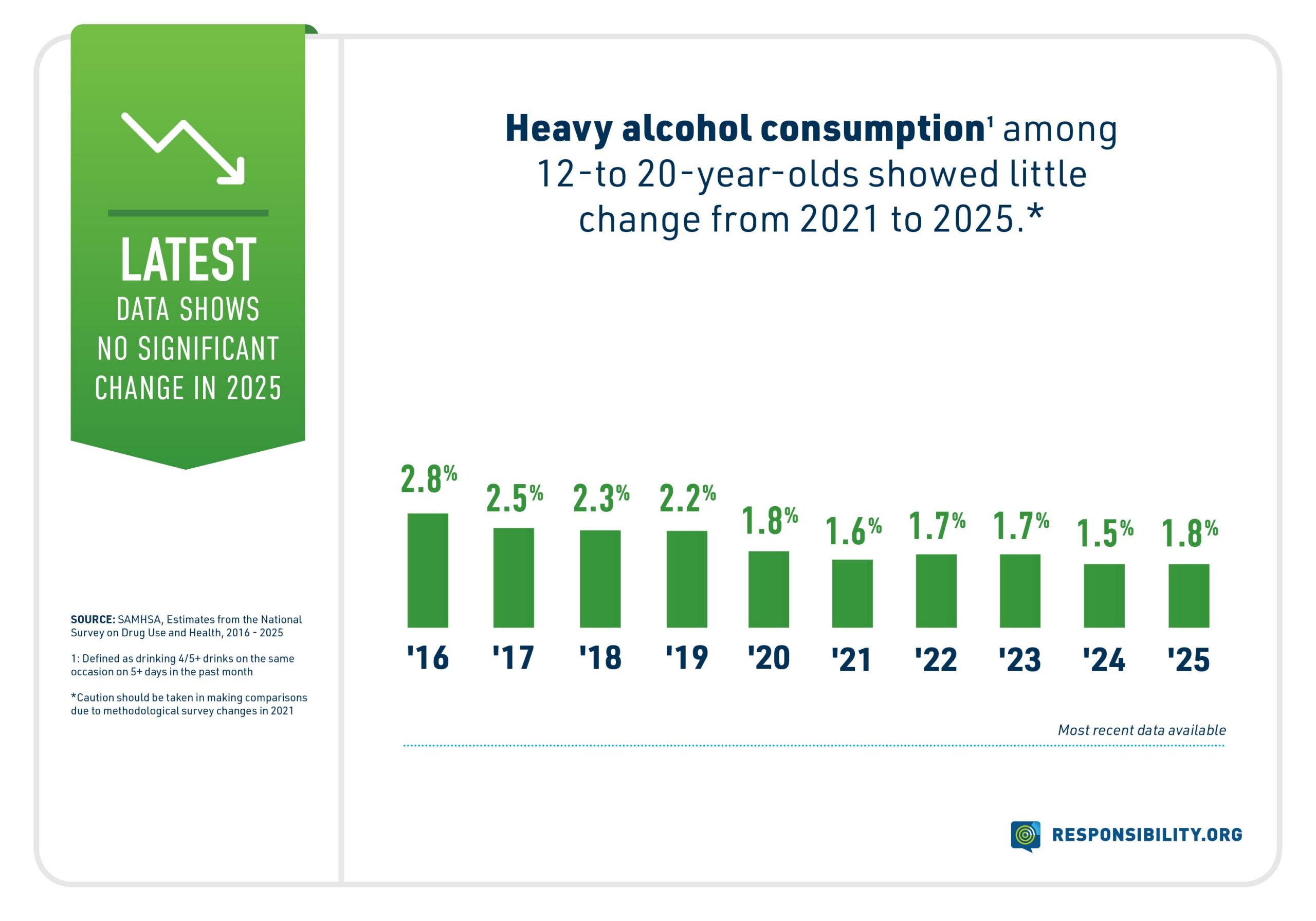
- There was no change in the rate of heavy drinking (five or more drinks on the same occasion on 5 or more days in the past 30 days) among 12- to 20-year-olds from 1.6% in 2021 to 1.8% in 2025. (Source: SAMHSA, 2025 National Survey on Drug Use and Health, 7/2026)
College Drinking – National Survey Results
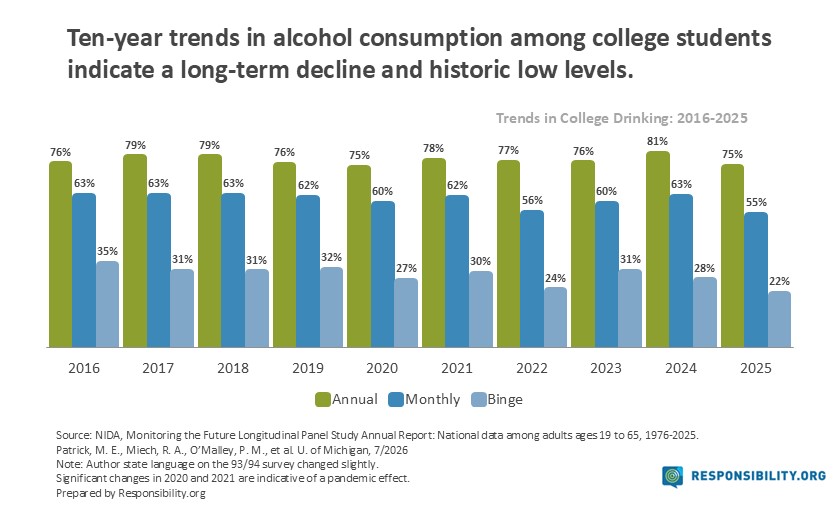
According to the Monitoring the Future Longitudinal Panel Study, in 2025, past month alcohol consumption and binge drinking among college students (19 to 22 years of age) reached new historic low levels. College students (19 to 22 years of age) continued to report higher prevalence rates of alcohol consumption compared to their non-college peers, however, significant declines over the past 10-years in past 30-day consumption rates were noted among college students and non-college young adults.
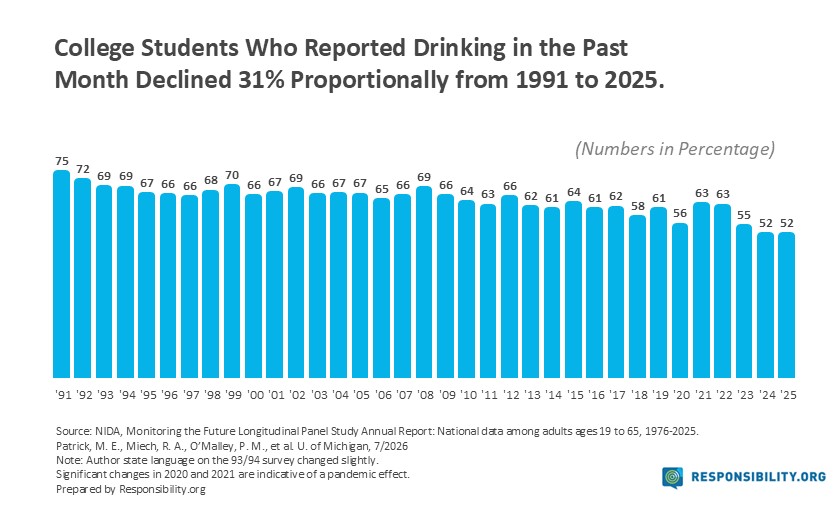
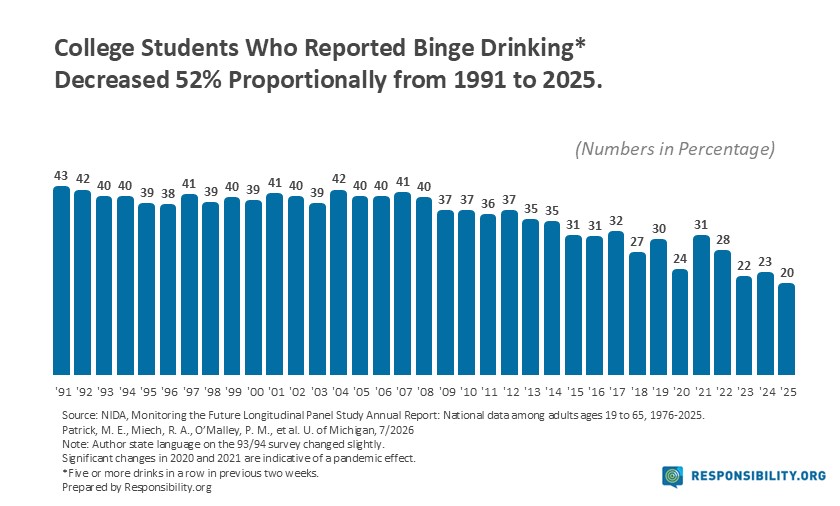
Overall, the prevalence of college drinking over the past 30 years, measured as annual and past 30-day consumption rates, continues to trend downward. Since 1991, annual consumption among college students declined 18% proportionally; monthly consumption has declined 31%
proportionately, and binge drinking declined 52%.
In 2025, more than one in four college students (28%) report they did not consume alcohol in the past 12 months, and 48 percent report they did not drink alcohol in the past 30-days. Rates of binge drinking among college students decreased from 2024 to 2025, reaching a new all-time low level (20 percent).
- Long-term decreases in past 30 day consumption among college students was noted in 5- and 10-year trends, reaching a new historic low level of past 30 day consumption among college students – 52 percent. Despite these long-term downward trends in alcohol consumption among college-age adults, in 2025, college women continued to report higher prevalence rates for past-year and past-month consumption than college men (75% and 71%, respectively, and 53% and 52%).
- Among college and non-college young adults there were no significant differences in past 12 month or past 30 day alcohol consumption prevalence rates.
- In 2025, one in five college students reported binge drinking (having five or more drinks in a row in the past two weeks); one in six non-college age young adults. Historically more prevalent among college students, binge drinking for both groups has seen significant declines over the past decade, with prevalence rates converging during the decline. Among both cohorts, binge drinking reached new all-time low levels (20% and 17%, respectively).
- Over the past five years, binge drinking among college men and college women has been on the decline. In 2025, 23% of college men reported binge drinking, and 19% of college women reported engaging in this risky behavior. Binge drinking among college men dropped to a new record low level.
- In 2025, the number of college students reporting they engage in high-intensity drinking (consuming 10 or more drinks in a row at least once in the past two weeks) increased from 2024 – from 4.7 percent to 6.9 percent. The prevalence of this risky behavior is similar for college and non-college young adults (5.9%).
- College men are three times more likely to report engaging in high-intensity drinking is significantly higher than college women (11.2% and 3.5%, respectively).
(Source: University of Michigan, Monitoring the Future Longitudinal Panel Study Annual Report: National data on substance use among adults ages 19 to 60, 1976-2025, 7/2026)
Gender Differences in Alcohol Consumption
According to the 2025 National Survey on Drug Use and Health (NSDUH), nearly 5.4 million 12- fo 20-year olds reported consuming alcohol in the past year.
In 2025, females aged 12 to 20 reported higher rates on alcohol consumption on prevalence rates than their male peers – lifetime (33.3% females vs. 30.7% males, respectively) and past year consumption (26.4% females v. 24.8% males). The rate of past month alcohol consumption, (13.8% females v. 13.7% males), and heavy alcohol consumption (1.9% females v. 1.7% males) were about the same, while the rate of binge drinking was lower among females than males in 2025 (7.7% females v. 8.2% males). Similar to their older peers, 12- to 17-year old females report higher rates of underage drinking – lifetime, past year drinking, and heavy alcohol consumption compared to their male peers in 2025. While current alcohol consumption and binge drinking rates were the same or slightly higher among males. Heavy alcohol consumption rates remain very low among both males and females (0.2% males and 0.4% females). There were no statistically significant changes noted in the gender gaps in alcohol consumption from 2024 to 2025 among 12- to 20-year olds and 12- to 17-year olds, however, even the slight single year increases on any of these prevalence rates remains a concern. (Source: SAMHSA, 2025 National Survey on Drug Use and Health, 7/2026)
The Monitoring the Future Longitudinal Panel Study reports that annual and monthly consumption among college men and women did not differ significantly in 2025, however, rates of past 12-months and 30-days among college women remains higher than the prevalence rates of their male peers. While consumption trends have been declining for college men and women over the past five years, past 30-day prevalence rates for college women reached the lowest recorded level in 2025 (53%).
College students also continue to report slightly higher prevalence rates of alcohol consumption – annual and monthly – compared to their non-college age peers; however, these rates are not statistically significant and over time the rates have converged. Seven out of ten college students and non-college young adults consumed alcohol in the past year (72% and 69%, respectively); half of college students (52%) and non-college young adults (49%) report drinking in the past month.
Additionally, there were no significant differences in binge drinking (defined as having consumed five or more drinks in a row during the previous two weeks) or high intensity drinking (defined as having consumed 10 or more drinks in a row at least once in the past two weeks) among college young adults compared to their non-college age peers. College students and their non-college peers had similar rates of binge drinking (20% vs. 17%) as well as high-intensity drinking (10+ drinks in a row) in the past two weeks (7% vs. 6%).
- Ten-year trends indicate significant long-term declines in binge drinking for both college men and college women. In 2025, a new historic low level of binge drinking was recorded for college men.
- College men report significantly higher rates of high intensity drinking, that is, having 10 or more drinks in a row in the past two weeks than their college women peers (11% and 4%, respectively).
- College men report significantly higher rates of high intensity drinking, that is, having 10 or more drinks in a row in the past two weeks than their college women peers (11% and 4%, respectively).
(Source: University of Michigan, Monitoring the Future Longitudinal Panel Study Annual Report: National data on substance use among adults ages 19 to 60, 1976-2025, 7/2026)
Where Do Youth Get Their Alcohol?
According to the 2025 National Survey on Drug Use and Health (NSDUH), nearly half current underage drinkers ages 12 to 20, who consumed alcohol in the past month, report the last time they drank alcohol it was either at their own home (44%) or in someone else’s house (42%). Additionally, seven out of 10 of these underage drinkers (71%) report they drank with more than one other person the last time they drank.
Family and friends continue to be a leading source of alcohol for today’s youth. Sixty-nine percent of current underage drinkers said they did not pay for the alcohol they consumed the last time they drank. The most frequently cited source of alcohol for current underage drinkers, who did not pay for the alcohol, was an unrelated person aged 21 or older (30%), followed by family and friends. More specifically, their own parents/guardian (14%), another adult family member 21 or older (16%), another underage person (18%), took it from own home (9%), and took from someone else’s home (2%). (Source: SAMHSA, 2025 National Survey on Drug Use and Health, 7/2026)
Regardless of the source of alcohol, youth report access to alcohol is easy. According to the 2025 Monitoring the Future study 75% of 12th graders, 54% of 10th graders, and 37% of 8th graders say it is “fairly easy” or “very easy” for them to get alcohol. On a positive note, despite reported ease of obtaining alcohol disapproval of binge drinking on weekends continues to remain high among all three grade levels (8th, 82%; 10th, 83%; 12th, 75%).
Influence of Parents
Despite being identified by youth as one of their primary sources of alcohol, hands down, parents are the most influential person or thing in their child’s decision not to drink at all or not to drink on occasion. In a 2025 survey of parents and their kids, 50% of youth reported their parents as the leading influence on their decision to drink or not.